ADHD

How Rejection Sensitivity Can Show Up in ADHD

Rejection sensitivity is often used to describe an unusually intense emotional response to perceived criticism, rejection, disappointment or failure. In discussions about ADHD, the term Rejection Sensitive Dysphoria (RSD) is sometimes used to describe experiences in which relatively ordinary interpersonal events can trigger profound emotional distress. It is important to be precise about the terminology.

11 Everyday Habits That Can Make ADHD Harder to Manage

Living with Attention Deficit Hyperactivity Disorder (ADHD) can be challenging, but symptoms are not only influenced by the condition itself. Everyday habits, routines, and lifestyle choices can also have a significant impact on focus, organisation, emotional regulation, and overall wellbeing. While no single habit causes ADHD, research suggests that certain factors may make symptoms more

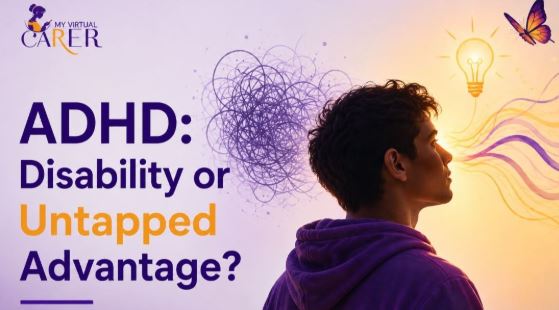
ADHD: Disability or Untapped Advantage?

For much of modern history, ADHD has been discussed almost exclusively in terms of difficulty and deficit. The conversation has often focused on what people with ADHD struggle to do rather than what they may be capable of achieving. These challenges are real, and for many individuals they can have a significant impact on education,

Why So Many Adults With ADHD Go Undiagnosed For Years

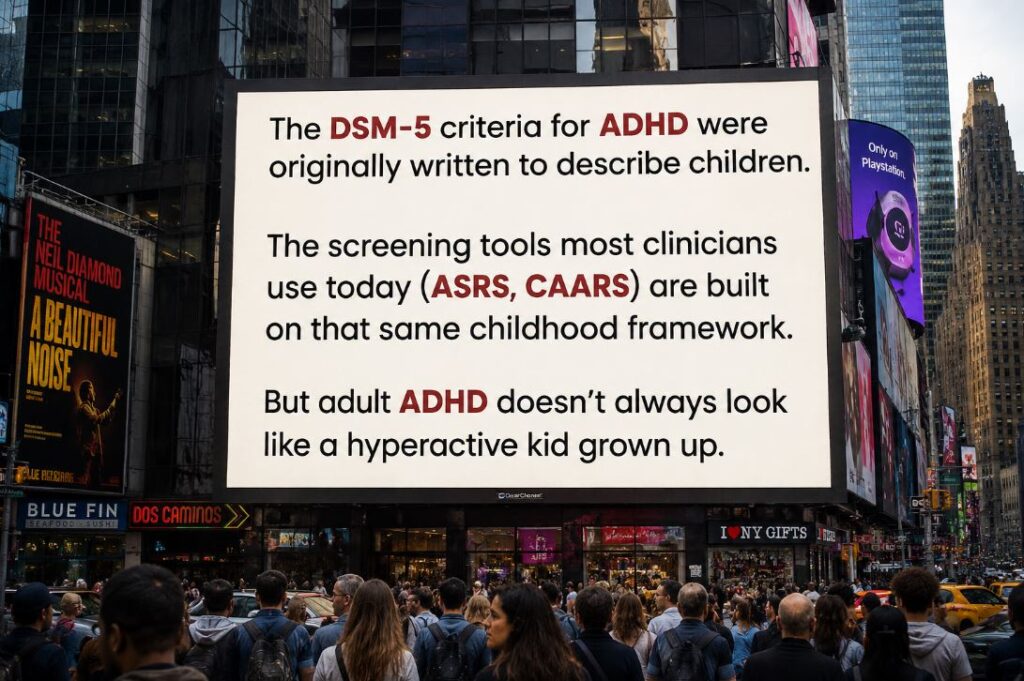
One of the biggest challenges in ADHD diagnosis is that much of our understanding of the condition was originally built around how it presents in children, particularly young boys. As a result, many adults spend years seeking help for anxiety, burnout, depression, chronic stress, emotional overwhelm, relationship difficulties, or sleep problems without ever considering that

“You are Difficult to Work With”

“You are difficult to work with.” Few workplace comments carry as much weight as this one. It is often delivered casually, perhaps during feedback, performance discussions, or even informal conversations between colleagues. Yet for many neurodivergent employees, it reflects years of being misunderstood, judged against unwritten social expectations, and expected to navigate workplaces that were

Undiagnosed ADHD in Adults: When “Just Being Busy” Is Something More

For many adults, Attention-Deficit/Hyperactivity Disorder (ADHD) is still associated with the image of a hyperactive child struggling to sit still in a classroom. Yet millions of adults live with ADHD without ever realising it. They may spend years believing they are simply disorganised, lazy, forgetful, overly emotional, or “bad at adulting,” when in reality they

Understanding ADHD in Children: More Than Just Being “Hyper”

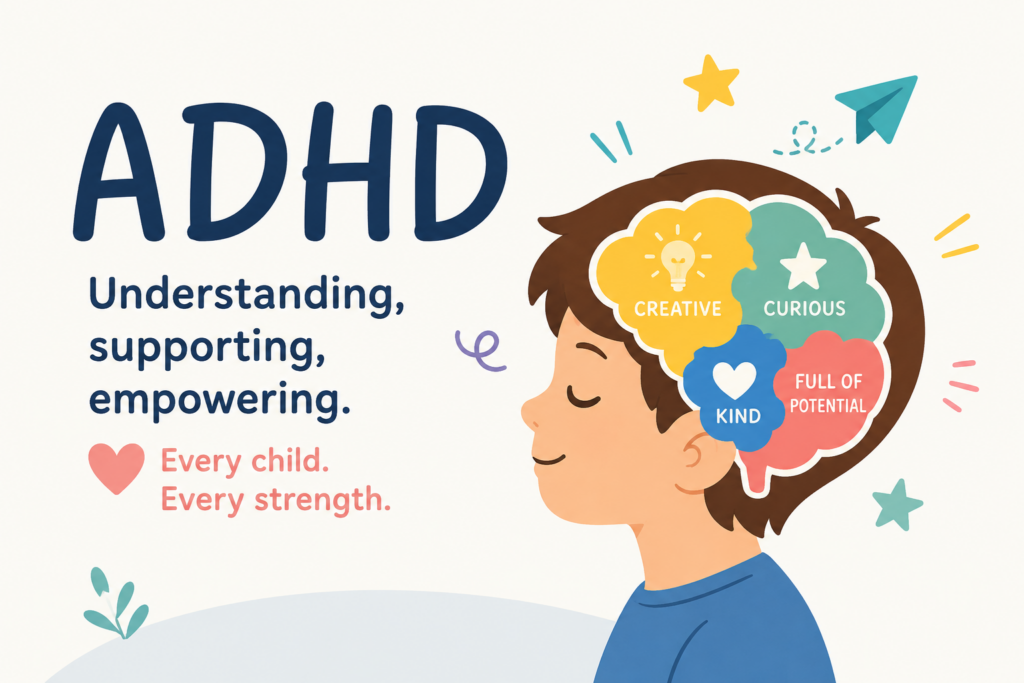
Attention-deficit/hyperactivity disorder (ADHD) is a long-term neurodevelopmental condition that affects millions of children around the world. While many people associate ADHD with being overly energetic or unable to sit still, the reality is far more complex. Children with ADHD often experience differences in attention, impulse control, emotional regulation, and activity levels. These challenges can affect

Why does my loved one keep repeating words? Understanding echolalia in care

What is echolalia? Echolalia is the repetition of words or phrases, either immediately after hearing them or later on. It is commonly seen in conditions such as autism spectrum disorder and can also appear in dementia. It might sound like: It can feel confusing, even frustrating. But like many behaviours in care, echolalia is not

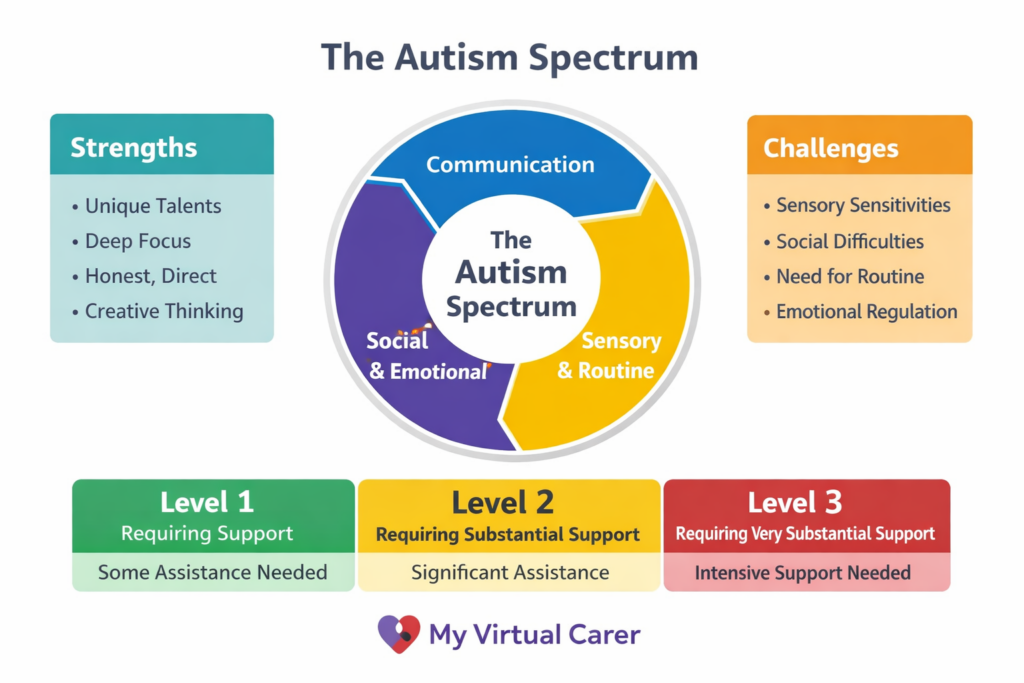
Understanding Autism: What the Spectrum and “Levels” Really Mean

Autism is often described as a spectrum. But for many families and carers, that word can feel confusing or even misleading. People sometimes imagine a straight line from “mild” to “severe”. In reality, autism does not work like that at all. Autism is better understood as a profile of differences and support needs that can

Autism vs. Learning Disability: Understanding the Difference

The terms autism and learning disability are often used interchangeably in everyday conversation, but they describe very different things. While some people may experience both, autism is not a learning disability. Understanding the distinction matters for inclusion, for support, and for ensuring people get the right help rather than being misunderstood or underestimated. What is

Autism Fatigue: When the World Demands More Than a Nervous System Can Give

Autism fatigue is the deep, cumulative exhaustion that comes from living in a world not designed for autistic nervous systems. It is not simply being tired after a busy day. It is a whole-body, whole-mind depletion that builds over time when sensory overload, social demands, and constant self-regulation pile up without enough recovery. For many

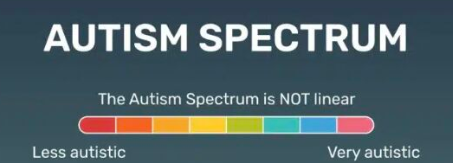
Why Autism Is Called a Spectrum And Why That Matters

Autism is often described as a spectrum, yet this word is one of the most misunderstood aspects of the condition. Autism is a neurodevelopmental difference that can influence how a person experiences communication, social interaction, sensory input, routines, and change. In the UK, at least one in every hundred people is autistic and many believe this

The Children of Darkness: A Glimpse into the Unseen Struggles of Autistic Children

In 1983, a documentary titled The Children of Darkness aired, casting an unflinching spotlight on the challenges faced by children with autism and the underexposed world of psychiatric institutions in America. At the time of its release, the documentary stunned audiences with its raw portrayal of autistic children and the conditions they lived under in the 1970s

Scroll to Top