
In Canada, children diagnosed with autism spectrum disorder (ASD) are entitled to a variety of supports, services, and financial benefits provided through both federal and provincial/territorial programmes. These can help families manage the costs of care, access therapy, and create opportunities for their child to thrive.
Understanding these entitlements — and how to apply for them — is an important step in ensuring your child receives the support they need.
1. Federal Benefits and Support Programmes
These are available nationwide, regardless of province or territory:
- Disability Tax Credit (DTC) – A non-refundable tax credit that reduces the amount of income tax payable for individuals with disabilities, or their supporting family members. To qualify, a medical professional must certify that the disability is severe and prolonged, and that it impacts daily living.
- Child Disability Benefit (CDB) – A tax-free monthly payment for families caring for a child under 18 with a severe and prolonged impairment. Eligibility is linked to the Canada Child Benefit (CCB) and the DTC. For July 2025–June 2026, eligible families can receive up to $3,411 annually per child, with income-based reductions.
- Canada Child Benefit (CCB) – A tax-free monthly payment to help with the cost of raising children. Receiving the CDB requires CCB eligibility.
- Registered Disability Savings Plan (RDSP) – A long-term savings plan to help secure the financial future of individuals with disabilities. The government supports savings through matching grants and bonds. To open an RDSP, the beneficiary must qualify for the DTC, have a Social Insurance Number, be a Canadian resident, and be under age 60.
- Canada Disability Savings Grant (CDSG) – Matching government contributions to RDSPs, with the amount based on family income and contributions made.
2. Provincial and Territorial Programmes
Each province and territory offers its own set of autism support programmes. Using Ontario as an example:
- Ontario Autism Program (OAP) – Provides needs-based funding ranging from $6,600 to $65,000 per year for children and youth with autism. The child must be under 18, live in Ontario, and have a written autism diagnosis.
- Special Services at Home (SSAH) – Financial support for families caring for children with developmental or physical disabilities, covering caregiver relief and participation in developmental activities.
- Assistance for Children with Severe Disabilities (ACSD) – Monthly financial assistance for guardians of children under 18 with severe disabilities, to help with extra costs.
- Individual Education Plan (IEP) – Schools are required to provide an IEP for students who need additional support, detailing strengths, needs, learning goals, and accommodations.
- Ontario Assistive Devices Program (OADP) – Covers up to 75% of the cost of approved assistive equipment for individuals with long-term physical disabilities.
- Behaviour Analyst Services Tax Credit – As of July 2024, services from Behaviour Analysts are eligible for the Medical Expense Tax Credit in Ontario.
3. Other Potential Sources of Support
- Autism-Specific Grants – Charities and non-profits across Canada offer funding for therapy, educational tools, respite care, and assistive devices.
- Jordan’s Principle – Ensures First Nations children can access the support and services they need, covering health, social, and educational costs without service delays.
Important Notes
- Eligibility, application processes, and benefit amounts vary by province or territory.
- Some benefits are income-tested, meaning the amount you receive may depend on your family’s financial situation.
- It’s important to keep thorough records and apply as early as possible for time-sensitive funding programmes.
- Government policies and benefit rates change, so always check the most up-to-date information from official sources.
This guide is for information purposes only. For medical advice, assessment, or a diagnosis, please consult a qualified healthcare professional.
Making Care Coordination Easier
While these entitlements can provide vital support, the process of managing appointments, therapy schedules, educational plans, and multiple care providers can feel overwhelming.
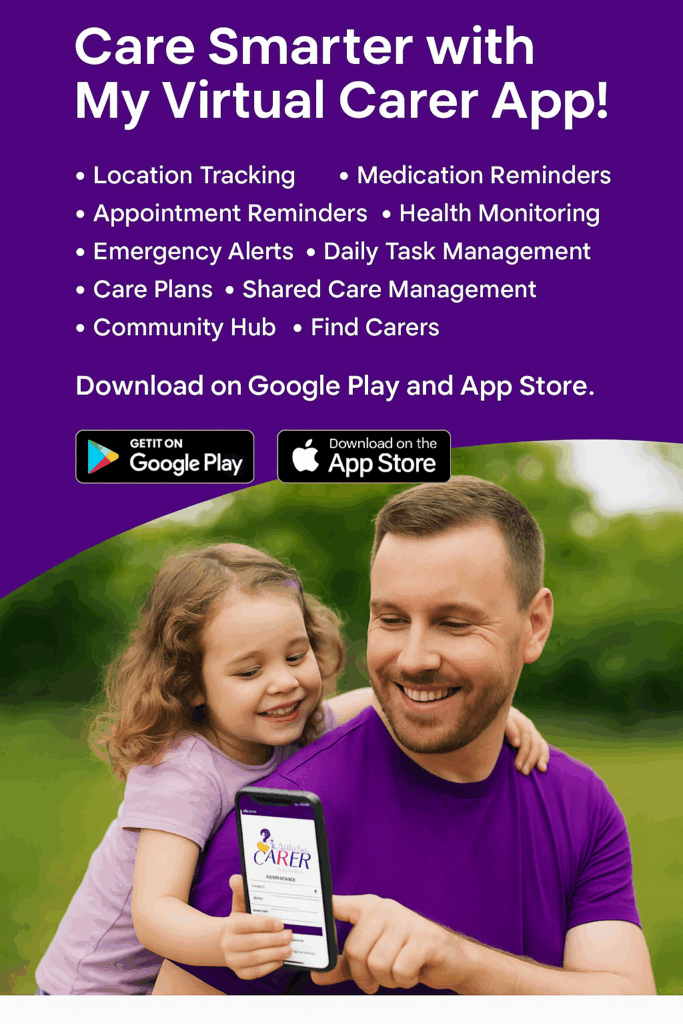
The My Virtual Carer app can help families stay organised and connected by providing:
- Shared care plans that can be accessed by parents, therapists, and support workers
- Custom reminders for appointments, therapies, and daily routines
- A care journal to track progress and share updates between carers
- A secure hub for storing important documents and contacts
By keeping everything in one place, My Virtual Carer can help you make the most of the support your child is entitled to — and free up more time for what matters most: caring for your child.
📲 Find out more and download the app here: www.myvirtualcarer.com